Author Archive

Vision 2020: Gather at the River

July 1, 2010

Reflection presented at Province Gathering 2010
Session 2: Celebrating our beginnings
Thursday, July 1, 2010, 9:15 a.m.
Hyatt Regency North Ballroom
Louisville, Kentucky

My Marianist story began seven years ago when, as a contact, I applied for—and was accepted to—the Marianist formation program. Since then, I have lived in four different parts of the Province: San Antonio as an aspirant; Dayton as a first-year novice; St. Louis as a second-year novice; and San Antonio as a temporary professed—and, as of last October, a perpetually professed.

Throughout my entire life in the Society of Mary, I have known and lived in only one province: the Province of the United States. Therefore, the story of the first eight years of the province coincides with my own formation as a Marianist brother. As I reflect on these past seven years, …

Continue reading post at our sister site

Reflection: 8th Wednesday in Ordinary Time

May 26, 2010

Mass: Wednesday, May 26, 2010
First Reading: 1 Pt 1:18-25
Responsorial: Psalm 147:12-13, 14-15, 19-20
Gospel: Mk 10:34-45

Reflection

At morning prayer, I posed a question for possible reflection of the day: How will the choices I make today reflect a vocation committed to leading myself and others to God’s love?

So, how did we do today?

As educators, I’m sure we are familiar with the many ways we can educate others about the values of our Marianist life through words, actions and examples.

One particularly powerful way of educating others—beyond words, actions and examples—is through our choices.

What actions of our day reflected our choice to live this vocation and accept its privileges and limitations?

What actions of our day reflected our choice to live not just the letter of the vows, but the spirit of the vows—which ask us to go above and beyond what we are asked to do?

What actions of our day reflected our choice to live this vocation with joy and happiness—and share that with those around us, in ministry and community?

In life, the choices we make often result in some consequences and costs. For Jesus, the choice to follow his vocation cost him his life.

For those who choose to live religious life, it costs us the ability to make decisions on our own about what we do, where we live and with whom with live.

For those who profess the vow of stability, it costs us the option of having a contingency plan where we can wait and see until it all turns out before making a commitment.

For those who risk sharing God’s love and expressing that through healthy affection for one another costs us the risk of being rejected.

Sometimes, it’s the little things that we choose to do that can teach others a lot about what we cherish and value about our Marianist vocation.

Courtesy of Brother Jerry Matz, retired sociology professor of St. Mary’s University, this is a list of simple, everyday choices we can make:

At the end of your day, ask yourself, “Today, have I…”

  • Greeted someone by his/her first name?
  • Smiled at someone?
  • Hugged someone?
  • Complimented someone?
  • Affirmed someone?
  • Thanked someone?
  • Laughed with someone?
  • Offered a potentially-helpful suggestion to someone?
  • Listened attentively and patiently to someone?
  • Offered to help someone?
  • Actually helped someon?
  • Given someone some of my valuable time?
  • Shown patience with someone who frustrates me or whom I dislike?
  • Tried to cheer-up someone?
  • Prayed for someone?

(excertps from a list developed by Brother Jerome Matz, S.M., Ph.D.)

At profession, we each made a public commitment to choose our vocation again and again. Choosing is central to loving; choosing again and again is essential to the deepening and growth of that love—and it is love that keeps us faithful.

Let us pray that the eucharist that we receive today strengthen us in our commitment to choose, time and again, to reflect a vocation committed to leading myself and others to God’s love.

Reflection: 5th Tuesday of Easter

May 4, 2010

Mass: Tuesday, May 4, 2010
First Reading: Acts 14:19-28
Responsorial: Ps 145:10-11, 12-13ab, 21
Gospel: Jn 14:27-31a

Reflection

If you were given three wishes, what would they be? Of course, if you ask me, I’d always make sure that the third wish I would ask is for more wishes!

Inspired by the spirit of today’s Gospel, where Jesus tells his disciples about his hopes for them as he prepare to department, my reflection focused on answering this question: What would be God’s three wishes?

I think one wish that God would want for us is for us to be at peace. Jesus tells his disciples, “Peace I leave with you; my peace I give to you…Do not let your hearts be troubled or afraid.”

Perhaps the reason why God wants us to be at peace is so that we can become people who live with a sense of gratitude for all of God’s blessings and gifts.

Those who live with a sense of gratitude are not only much more pleasant to be around, but also inspire us to see the challenges of life as ways to grow, mature and deepen our faith and trust in God—just like Paul in the first reading.

It also is this sense of peace that allow us to live in a world where differences are appreciated and embraced, allowing for countries to seek collaborative, rather than aggressive, solutions for international conflict.

Another wish God might make is for us to know how much we are loved by God. Just count the many ways we have been blessed in our lives and to commit ourselves everyday to remembering that even in the midst of our sin, God still loves us unconditionally and without question. And, image how God must feel when, in our humanity and limitations, we struggle to be faithful to our vocation of serving others.

Finally, a third wish I think God would want is to share that love with others. The peace and love that we’ve been granted in those first two wishes compel us to action and allow us to share that with others. As the words of our communion song, El Amor Nos Unió, sing, “Where there is charity, there is love, there is our Lord. Jesus gives us life and unity, en the sacred communion. The cross and pain are love, love is a commandment of God. Love united us as we sing this song.”

As we are reminded of the peace and love that we are given daily, let us pray that through our poor efforts at holiness, we may bring about God’s wishes for a world of peace, love and aloha.

Reflection: Monday, Octave of Easter

April 5, 2010

Mass: Monday, April 5, 2010
First Reading: Acts 2:14, 22-33
Responsorial: Ps 16:1-2a and 5, 7-8, 9-10, 11
Gospel: Mt 28:8-15

We continue our week-long celebration of Easter Sunday, a time when we are filled with unbounded joy — let the Church say, “Amen!” Jesus is risen from the tomb—let the Church say, “Amen!” Christ has conquered death with resurrection to new life—let the Church say, “Amen!” Now that was one way to get our worship community to show that this morning is no longer Lent!

So, just to recap the events of the past few days, while we were celebrating Easter, the following events happened, as taken from recent news headlines: Bombs set off in Pakistan and Russia. Church abuse scandal in Europe. 17-year old shot in chest Easter Sunday. Woman killed in hit-and-run on I-35 in San Antonio. And, of course, Lakers lose by 19 to Spurs.

Okay, except for the last one, all of those headlines include stories of death, pain, suffering, violence and anger. And while we celebrated appropriately with joyful singing, feasting and cracking cascarones over our heads, the world continues to cry out for the Good News of the Gospel message.

So what can we do about it? Today’s Gospel gives us a clear message from the Risen Jesus’ own words, “Do not be afraid. Go tell my brothers…” This means Jesus sends us forth as witnesses of this great news to share with others: that sin, death and the cross do not have the final word, but that the resurrection follows. That’s what we do with Easter joy: share with others.

The first reading also reflects this sentiment through the example of Peter. Yes, this is the same Peter who didn’t have enough faith to trust he could walk on water, who was told by Jesus to “get behind me, Satan,” and denied that he even knew Jesus three times.

But, something clicked; the resurrection changed his life. He realized that, despite his humanity, sins and weaknesses, he was forgiven! And now, what to we see him doing in the first reading: sharing this with others.

The refrain from today’s psalm, “Keep me safe, O Lord,” reminds us that God always is present in our lives. This is important to remember that the following of Christ means we also carry the cross—the challenges of life that come to us in many forms. Despite these “crosses,” we are reminded that resurrection, light and joy always awaits.

To be a disciple means to share with one another the good news of God’s love for us. That may come in the form of an insight gained in prayer, a talent that is meant to be shared, an opinion or a fraternal correction that is needed for our personal growth in community—which is a big aspect of our Marianist vocation.

One way we can do that is through committing ourselves daily to the vision of our founder, Blessed William Joseph Chaminade, in support of Mary’s mission. Let us to do this by reciting our prayer of dedication.

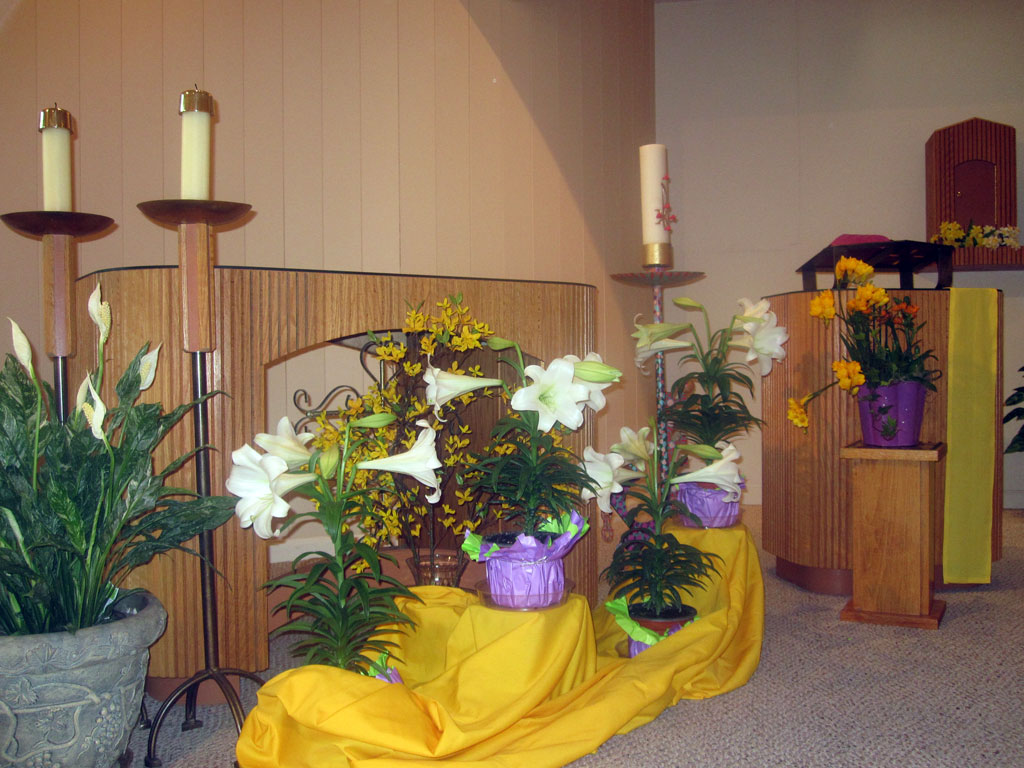
Reflection: 4th Tuesday of Lent

March 16, 2010

Mass: Tuesday, March 16, 2010
First Reading: Ez 47:1-9, 12
Responsorial: Psalm 46:2-3, 5-6, 8-9
Gospel: Jn 5:1-16

Reflection

If an Academy Award were given for today’s set of readings, the “best supporting character” award would go to…water. After all, the common theme shared with the first reading and Gospel is water—for its life-giving, life-sustaining and healing properties.

Nearly 3/4 of our planet is made up of water. Similarly, our bodies are made up of about 70 percent of water.

I would suspect that throughout history, many cultures would… 

Continue reading the original post.

Reflection: 3rd Monday of Lent

March 8, 2010

Mass: Monday, March 8, 2010
First Reading: 2 Kgs 5:1-15ab
Responsorial: Psalm 42:2, 3; 43:3, 4
Gospel: Lk 4:24-30

A prophet is one who has been identified as “an individual who is inspired to proclaim the will of God in a visionary and new way.”

Inspired by the readings for today, my thoughts focused on the role of prophets in our world. In the Gospel, Jesus remarks that prophets often have been identified as the crazy ones who are the misfits, rebels, troublemakers—particularly in their native place.

The world would have been better off if it had listened to these prophets, rather than rejected them. So, if a genuine prophet of God were to enter our chapel at this moment, would we be ready? Would we be open to the prophet’s message? Can we discern how the prophet may invite us to deeper understanding of God’s presence in our daily life?

And while it is important to be vigilant and wary of those ‘false prophets’ whose thoughts are not inspired by God, I think there is some wisdom in this train of thought:

  • The Church is a prophetic voice in our world.
  • Religious orders, such as the S.M. and FMI, are prophetic voices in the Church.
  • A local community within the S.M. can be a prophetic voice in the order.
  • An individual Marianist can be a prophetic voice in the community…who then also can be a prophetic voice to the order, the Church and the world.

By virtue of the gifts that each one of us have been blessed with, along with our desire to follow Christ in a unique lifestyle that is rooted in faith—seeing how God is present in all parts of our daily lives—I believe that everyone in this chapel is called to be a prophetic voice in our world.

What makes this vocation truly Marianist is that it is done together with one another—and that is what we value as the gift of community.

We each are blessed with different gifts, personalities, abilities and other talents that we have yet to develop. By combining those gifts, we are better able to discern how God calls us to be prophetic and respond to the needs of others.

If God had wanted all of us to be the same, why would God make each one of us uniquely different? And that gift also is the challenge—to combine our individual uniqueness into “a community of one heart and mind.”

So what does it take to listen and learn from the prophetic voices in our midst? Disposition of openness, willingness to dialog / staying at the table, fidelity to prayer, patience, and the humility to remember we always are in God’s midst when “two or three are gathered in God’s name” as promised in scripture; and this means not only in chapel, but also at the dinner table, in our community and office meetings, our upcoming consultations for different stages of formation, and even our fun nites!

As we prepare to receive the Eucharist this evening, let us pray in gratitude for the prophetic voices in our world that have moved us forward, and for the faithfulness to recognize those in our midst.

Reflection: 5th Tuesday in Ordinary Time

February 9, 2010

Mass: Tuesday, February 9, 2010
First Reading: 1 Kgs 8:22-23, 27-30
Responsorial: Psalm 84:3, 4, 5 and 10, 11
Gospel: Mk 7:1-13

One way that I was taught to pray with scripture was to imagine myself in the story and find a character or group with whom I could identify.

In today’s two readings, there are two central characters cast in the roles of good and bad: Solomon, who behaves as the protagonist in the first reading; and the Pharisees and scribes, cast as the antagonists in Mark’s Gospel.

Of course, we easily can see that if the Pharisees and scribes were only open to Jesus’ teachings, all would be well!

While we would like to align ourselves with Solomon, it should not be too much of a stretch to imagine that, at some point in their lives, the Pharisees and scribes were also like Solomon—one of the “good guys.” After all, as leaders of a worship community, they must have earned that honor somehow.

So what happened to them? How did they lose focus in living the true nature of their faith in favor of practicing rote traditions? When did following established customs become more important than an openness to discerning new insights? When did a single interpretation of expressing faith become “baptized” as the one, correct and absolute standard by which others are judged?

How ironic is it that these questions are posed by the one person in community who has been described as “someone whose schedule you can set your clocks by.” I have to admit that I prefer to have my schedule set a specific way to provide structure and perceived sense of efficiency in my life.

After all, having a set way of doing things helps me to settle, feel efficient and become comfortable. It’s efficient and works—why try a different way?

Although this attitude isn’t necessarily a bad thing, this mindset offers little room for flexibility, openness to variety and new ideas. My years in formation and spiritual direction have taught me to try and temper my strict adherence to established ways with a disposition of openness; in other words, while diligence and efficiency are great, don’t be closed to discerning the variety of other ways that God can be active in life…and I’ll honestly admit, that is the one area that I’ve struggled with and will have to continue working on over the years.

So, when Jesus points out the hypocrisy of the Pharisees and scribes, I easily can imagine that Jesus reminds me that, sometimes, my own personal actions do not match with the words that I speak.

Fortunately, the “basics” our lives as Marianist religious offer us many ways to grow in that area: centeredness in prayer; listening to God’s response as spoken through the voices of others, particularly our brothers in community; understanding how God is working through our strengths and weaknesses; and how our shared life calls us to be accountable to one another in being faithful to our vocation.

Brothers, we are given the gift of another new day and opportunity to live those values and put them into action as concrete expressions of our faith. Let us strive to make the words we speak in chapel match up with our lived actions so that we continue to grow personally and spiritually, and as community.

May the eucharist that we receive this morning renew our commitment to the vocation that we are called to live as Marianists.